At the heart of every Masonic lodge stands the altar, a profound symbol that has connected generations of Masons through shared values, sacred obligations, and the timeless pursuit of light and knowledge.
Throughout history, altars have been the epicenter of human ritual, devotion, and inspiration. From the rough stones of ancient worship to the elaborately adorned altars of great temples, these sacred spaces have borne witness to humanity’s search for the divine.
In Freemasonry, the altar takes on a unique and enduring role, serving as a bridge between the operative past of Freemasonry and its speculative present, and embodying the spiritual foundation of the fraternity. As the centerpiece to our Masonic lodges, the altar’s central role—not only as a physical object but as a representation of our collective labor and worship—reminds us that the principles we hold dear mirror the divine order of the universe.
What Is the Significance of the Masonic Altar?
Throughout Masonic history, the altar has served as an important symbol of the serious vows made by Freemasons. Humanity has used altars as places of communion since ancient times, from marriage ceremonies and holiday celebrations to blessings and seeking atonement. While Freemasonry does not replicate these rites, the altar represents reverence, solemnity, and dedication.
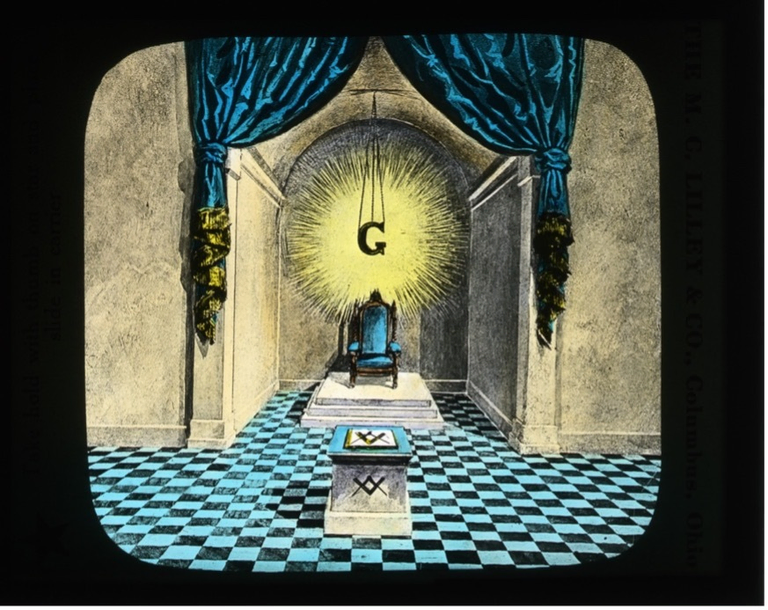 19th-century Masonic Magic Lantern Slide featuring the Lodge altar and the letter G, symbolizing Masonic teachings and symbolism. Masonic Magic Lantern Slide - Letter G, 1890-1930. The M. C. Lilley & Co., Columbus, Ohio. UN2000.0130.28
Many Brethren come to consider the altar, especially the one in their home lodge, to be a place of profound obligation. It is here that a man kneels to take solemn vows of Brotherhood, pledging to uphold the principles of Freemasonry. As Brother Jeremy Ladd Cross, the renowned Masonic author and lecturer, wrote for the Charge at Closing in his True Masonic Chart (1826):
“Remember, that around this altar, you have promised to befriend and relieve every brother, who shall need your assistance. You have promised, in the most friendly manner to remind him of his errors, and aid a reformation... Be diligent, prudent, temperate, discreet. Finally, brethren, be ye all of one mind; live in peace; and may the God of love and peace delight to dwell with and bless you.”
These words from Brother Cross resonate deeply with every Mason, reminding us of the sacred charge we accept around the altar: to support one another, to strive for self-improvement, and to extend kindness to all humanity.
A Connection to the Divine
The altar is also a symbol of man’s quest to commune with the divine. Inspired by the altars described in the Bible, where men like Noah and Abraham built sacred spaces according to God’s instructions, the Masonic altar represents the pursuit of closeness with the Supreme Architect. While Freemasonry does not prescribe religious doctrine, it embraces the universal principles of faith and devotion.
Brother Albert Mackey, in A Lexicon of Freemasonry, writes about the Masonic altar’s connection to ancient forms of worship in his description of the altar as "... a cube, about three feet high, with four horns, one at each corner, and having spread open upon it the Holy Bible, square, and compasses, while around it are placed in a triangular form and proper position the three lesser lights."
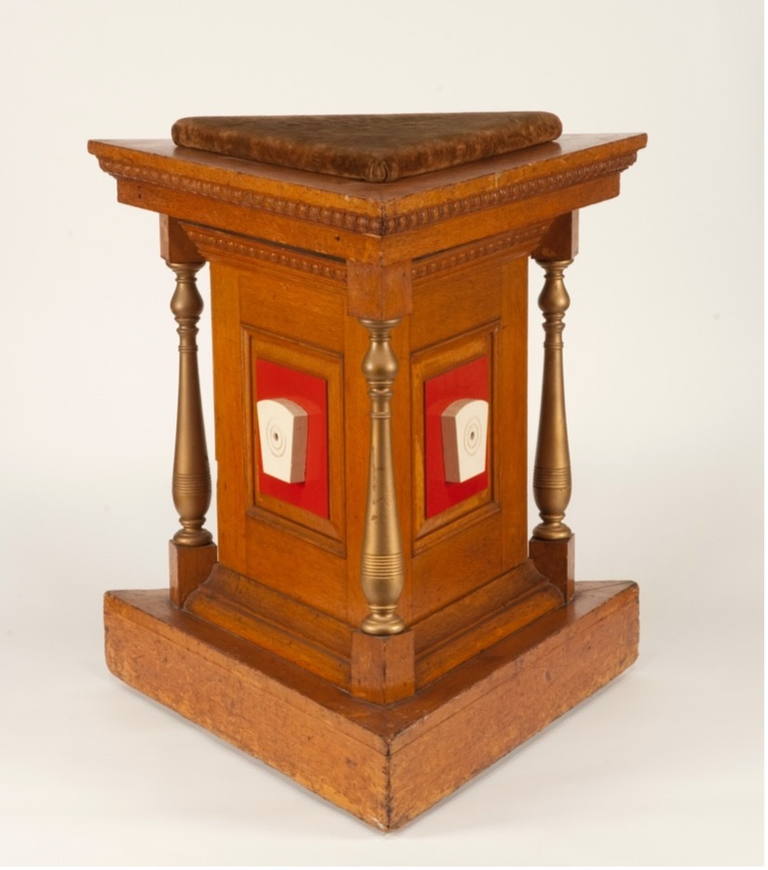 Masonic York Rite Royal Arch Chapter altar with cushion, ca. 1864–1900, illustrating central symbols of Freemasonry including the Holy Bible, square, and compasses., Masonic York Rite Royal Arch Chapter Altar with Cushion, 1864-1900. Massachusetts. Gift of Mystic-Woburn Royal Arch Chapter, Woburn, Massachusetts, 2010.025. Photograph by David Bohl.
To gather around the altar is to step into a tradition as old as civilization itself. It is to acknowledge the struggles, triumphs, and aspirations of those who came before us. The Masonic altar reminds us that, like the ancient peoples who knelt at an altar, we too are seekers and builders of a common good, moral order, and better world.
Continuing the Story of Freemasonry
To gather around the altar is to step into a tradition as old as civilization itself. It is to acknowledge the struggles, triumphs, and aspirations of those who came before us. The Masonic altar reminds us that, like the ancient peoples who have knelt at an altar, we too are seekers and builders of a common good, faith, fraternity, and a better world.
In the end, the Masonic altar is as much a call to action as it is an object. It challenges us to reflect, grow, and live by the principles that define our Brotherhood. As we kneel before it, we are reminded of our shared journey of faith, labor, and love, which continues to shape our lives and inspire our fraternity. For anyone seeking to understand Masonic beliefs, the altar remains one of the most powerful and enduring symbols in all of Freemasonry.
To read more about Masonic symbols, click here.