Freemasonry has always been a fraternity of learning — a place where men sharpen their minds, deepen their understanding of history, and reflect on the values that shape a meaningful life. Whether you’re a new Master Mason or a seasoned Brother seeking fresh insight, the following collection represents some of the most compelling, challenging, and inspiring titles in the Craft.
This list spans research, philosophy, American Masonic history, Scottish Rite heritage, and African American Freemasonry. Whether you're beginning your journey or deepening years of study, these books provide meaningful insight into the Craft and our history.
Research
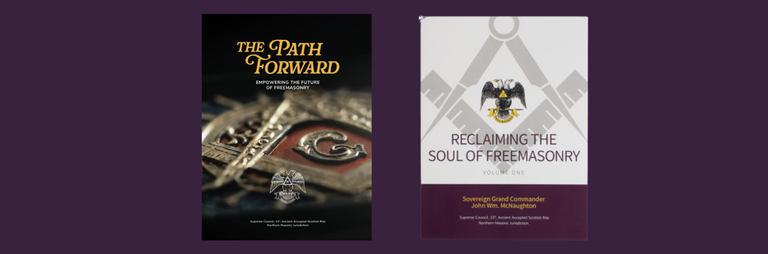
1. Reclaiming the Soul of Freemasonry by John Wm. McNaughton, 33°
Reclaiming the Soul of Freemasonry presents the findings of the landmark 2016 study commissioned by Sovereign Grand Commander John Wm. McNaughton — the most comprehensive, data-driven analysis of the Scottish Rite and the wider fraternity in more than two decades.
2. The Path Forward: Empowering the Future of Freemasonry by Len Cercone, 32°, and Linda Patch
The Path Forward: Empowering the Future of Freemasonry explores how men’s perceptions, motivations, and expectations of the Craft have evolved — and how the original 2016 research helped spark a modern Masonic renaissance. The updated findings reveal what has worked, what continues to resonate, and where Freemasonry must adapt to meet the needs of Millennial men today.
In this seminal work, McNaughton outlines how the research reshaped the strategy of the Scottish Rite, NMJ, guiding major investments in technology, digital engagement, leadership resources, degree modernization, member education, and nationwide outreach.
Ensuring Freemasonry’s Future
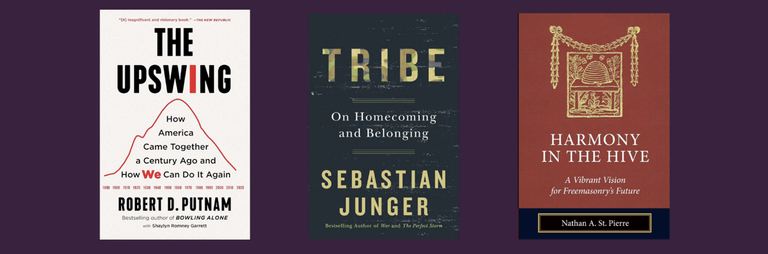
3. Harmony in the Hive: A Vibrant Vision for Freemasonry’s Future by Nathan A. St. Pierre
Harmony in the Hive invites readers to rediscover the heart of Freemasonry by exploring what truly makes the Craft meaningful: shared purpose, deeper learning, and genuine Brotherhood.
Using the beehive as a powerful symbol, Nathan A. St. Pierre encourages Masons to embrace unity, curiosity, and the wisdom that emerges when men work together toward something larger than themselves. He blends history, symbolism, and practical Lodge insight to show how Freemasonry can reclaim its role as a place where minds are stretched, spirits are nourished, and harmony is actively cultivated.
4. Tribe: On Homecoming and Belonging by Sebastian Junger
Tribe: On Homecoming explores the deep human need for belonging, purpose, and shared struggle—and why modern life so often leaves us feeling disconnected. Drawing from history, psychology, and anthropology, Sebastian Junger shows how tight-knit communities create bonds that offer meaning, stability, and emotional resilience.
For Freemasons, his insights resonate strongly: they reveal why Brotherhood matters, why men thrive when united by a common purpose, and how rekindling authentic community can transform both individuals and society.
5. The Upswing: How America Came Together a Century Ago and How We Can Do It Again by Robert Putnam
The Upswing shows how America once pulled itself out of a period of isolation, inequality, and polarization by rebuilding a culture of community, service, and shared responsibility—exactly the values at the heart of Freemasonry.
Robert Putnam’s analysis offers a powerful blueprint for how institutions like ours can help society shift from an “I” mindset back to a “We” mindset. For Freemasons, the book is a reminder that the future of the Craft depends on our ability to model unity, foster belonging, and create spaces where men find purpose and connection.
History
The Origins of Freemasonry
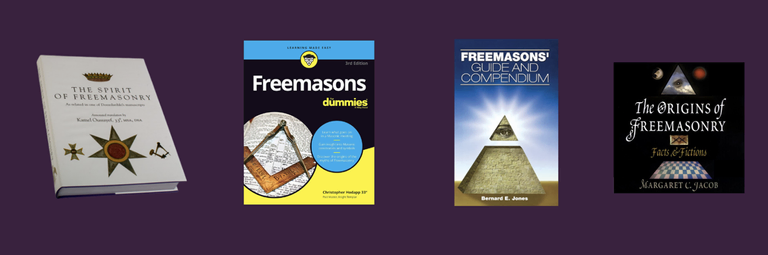
6. The Spirit of Freemasonry by Kamel Oussayef, 33°, MSA, DSA
A beautifully annotated translation of a rare early 19th-century French manuscript, The Spirit of Freemasonry immerses readers in symbols, rituals, and ideas that might otherwise be lost to time.
With vivid illustrations and insightful footnotes, it casts fresh light on the deeper meanings of Masonic practice, enriching the study of any Brother seeking a more profound understanding of the Craft.
7. Freemasons for Dummies by Christopher Hodapp
Approachable, engaging, and remarkably informative, Freemasons for Dummies demystifies every corner of the Craft—from symbolism and ritual to history, myths, related bodies, and modern misconceptions.
It’s an ideal starting point for new members, interested non-Masons, and a reliable refresher for experienced Masons who want a clear, accurate overview of the fraternity.
8. Freemasons' Guide and Compendium by Bernard E. Jones
A classic of Masonic education, Jones’s Compendium offers an expansive and meticulously researched look at the Craft’s history, symbolism, traditions, and evolution.
Written for the everyday Mason, it clarifies competing historical theories, honors ancient origins, and provides a trustworthy foundation for anyone eager to deepen their Masonic knowledge.
9. The Origins of Freemasonry: Facts & Fictions by Margaret C. Jacob
Margaret Jacob separates myth from documented history in this authoritative examination of Freemasonry’s true beginnings. Drawing on European archives and everyday Masonic materials, she reveals how and why the fraternity spread so rapidly, how it shaped democratic ideals, and the central role women played in its growth, offering Masons a clearer understanding of the Craft’s real story.
American Freemasonry
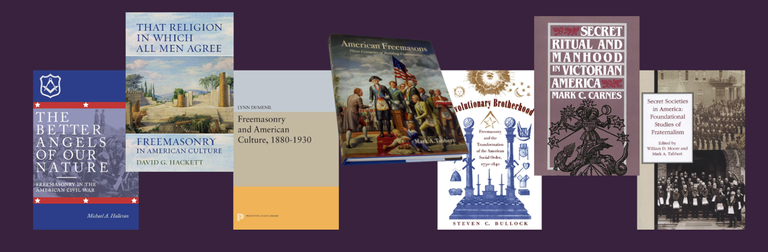
10. The Better Angels of Our Nature: Freemasonry in the American Civil War by Michael A. Halleran
Halleran’s work uncovers powerful firsthand accounts showing how Masonic brotherhood transcended the brutal divisions of the Civil War. Through diaries, letters, and battlefield stories, he illustrates the fraternity’s role in compassion, aid, and moral conduct—even between wartime enemies. For Masons, it is a moving testament to the enduring strength of our Brotherhood.
11. American Freemasons: Three Centuries of Building Communities by Brother Mark A. Tabbert
Lavishly illustrated and deeply researched, American Freemasons traces how Freemasonry shaped—and was shaped by—American history. From the Revolution to the Civil Rights era, Tabbert shows why millions of men joined lodges and how the Craft helped build civic life across the country. It’s an essential read for understanding Freemasonry’s impact on American culture and community.
12. Secret Ritual and Manhood in Victorian America by Mark C. Carnes
In Secret Ritual and Manhood in Victorian America, Carnes explores why millions of 19th-century American men joined fraternal orders and how ritual life offered meaning, identity, and a counterbalance to changing social norms.
His analysis provides Masons with a fascinating look at why fraternalism became such a powerful cultural force and why it continues to speak to men seeking purpose and Brotherhood.
13. Freemasonry and American Culture, 1880-1930 by Lynn Dumenil
Freemasonry and American Culture examines how Freemasonry evolved alongside America’s shift from Victorian values to modern consumer culture. Dumenil reveals how the Craft balanced tradition with new expectations of service, fellowship, and public engagement—helping today’s Masons see how the fraternity has continually adapted while preserving its core ideals.
14. Revolutionary Brotherhood: Freemasonry and the Transformation of the American Social Order, 1730-1840 by Steven C. Bullock
Bullock’s landmark book follows Freemasonry from colonial America through the Revolution and into the early republic, showing how the fraternity helped shape emerging ideas of liberty, equality, and democratic culture. By revealing Freemasonry’s role in building the nation, he offers modern Masons a powerful sense of heritage and purpose.
15. Secret Societies in America: Foundational Studies of Fraternalism, selected and edited by William D. Moore and Mark A. Tabbert
This book is out of print, but available to borrow at the Scottish Rite Masonic Museum & Library.
This collection brings together foundational research on American fraternalism, offering insight into how contemporaries understood ritual life, civic engagement, and the rise of “secret societies.” For Freemasons, it provides valuable historical context for the broader movement in which the Craft played a leading role.
16. That Religion in Which All Men Agree: Freemasonry in American Culture by David G. Hackett
That Religion in Which All Men Agree offers a compelling reexamination of Freemasonry as a major influence in American religious and cultural life. Following the Craft from its English origins into colonial America and beyond, Hackett demonstrates how Masonic beliefs, rituals, and symbols became part of the broader spiritual vocabulary of an emerging nation.
Scottish Rite Freemasonry
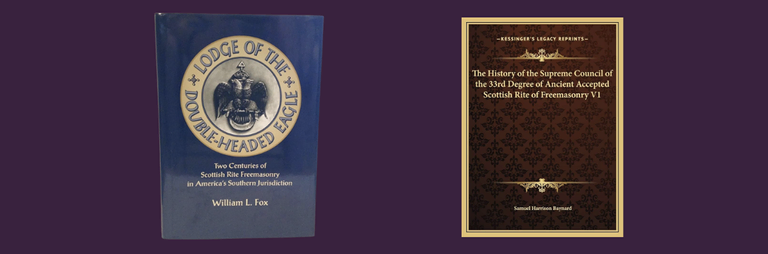
17. History of the Supreme Council, 33°, Ancient Accepted Scottish Rite of Freemasonry, Northern Masonic Jurisdiction of the United States of America and Its Antecedents by Samuel Harrison Baynard
This book has limited availability but is available to borrow at the Scottish Rite Masonic Museum & Library.
Baynard’s comprehensive history traces the origins, development, and legacy of the Scottish Rite, NMJ—from its origins to its growth into a major Masonic institution. Rich in detail and archival research, it helps Masons understand the structural, philosophical, and cultural evolution of the SRNMJ.
18. Lodge of the Double-Headed Eagle: Two Centuries of Scottish Rite Freemasonry in America’s Southern Jurisdiction by William L. Fox
This book has limited availability but is available to borrow at the Scottish Rite Masonic Museum & Library.
Spanning more than two centuries of the Southern Jurisdiction’s history, Fox’s work connects the story of Scottish Rite Freemasonry with the broader currents of American life. He shows how the Rite both influenced and was influenced by national culture, making it a valuable read for Masons studying the diversity of Scottish Rite traditions.
African American Freemasonry
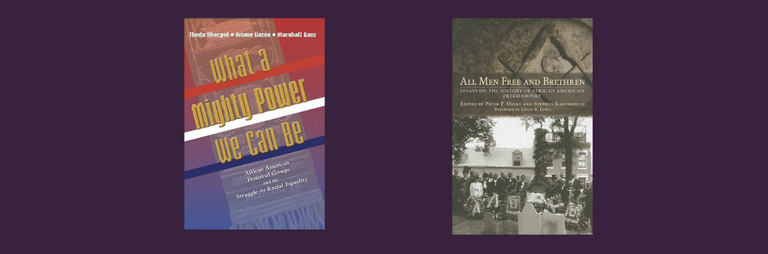
19. All Men Free and Brethren: Essays on the History of African American Freemasonry edited by Peter P. Hinks and Stephen Kantrowitz
This groundbreaking collection traces the story of African American Freemasonry from the Revolutionary era onward, highlighting Brother Prince Hall’s leadership and the lodges that shaped Black civic life. Through essays on activism, community building, and resilience, it reveals how African American Masons advanced fellowship, dignity, and equality.
20. What a Mighty Power We Can Be: African American Fraternal Groups and the Struggle for Racial Equality by Theda Skocpol, Ariane Liazos, and Marshall Ganz
A sweeping history of African American fraternal organizations, this book explores how Black lodges became engines of mutual aid, leadership development, and civil rights advocacy. It shows how fraternalism empowered communities to organize, resist discriminatory laws, and advance equality—underscoring the transformative potential of Brotherhood in action.
A Final Thought
Masonic study is a journey — one that evolves as we grow in the Craft. Whether these books challenge your thinking, enrich your sense of history, or deepen your understanding of Brotherhood, each one offers an opportunity to explore the enduring teachings of Freemasonry and the Scottish Rite.
FAQ
Q: What is the best book on Freemasonry?
A: There is no single “best” book on Freemasonry, because the Craft spans history, symbolism, philosophy, and lived Brotherhood. The best choice depends on what a reader is seeking.
For a clear and approachable introduction, Freemasons for Dummies by Christopher Hodapp is often recommended as the best starting point. For a deeper historical insight, books such as American Freemasons by Mark A. Tabbert or Revolutionary Brotherhood by Steven C. Bullock stand out. For seasoned Masons reflecting on the future of the Craft, Reclaiming the Soul of Freemasonry and The Path Forward: Empowering the Future of Freemasonry offer a research-driven perspective.
Ultimately, the best book is the one that matches a Mason’s stage in his journey.
Q: Why is the Scottish Rite called the “College of Freemasonry”?
A: The Scottish Rite is often called the “College of Freemasonry” because it builds on the foundational lessons of the Symbolic Lodge and offers Master Masons a deeper, more structured path of learning. Through its 4°–32° degrees, educational programs, and rich philosophical teachings, the Scottish Rite encourages members to explore the history, symbolism, and moral principles of the Craft in greater depth.
Q: Where can I find more information on Masonic history?
A: You can explore Masonic history through several trusted resources. The Scottish Rite, NMJ blog offers articles on symbolism, famous figures, and the evolution of the Craft. The Scottish Rite Masonic Museum & Library provides an extensive collection of research articles, archival materials, and digitized artifacts that illuminate Freemasonry and the Scottish Rite’s past.