This article was originally published in The Northern Light.
By PJ Roup, 33˚, Editor, Active for Pennsylvania.
After the thunder comes the rain. We are all probably familiar with that pithy aphorism – one that implies that following a period of strife, uncertainty, or turmoil, one can expect times of peace, calm, and predictability. We’ve probably all experienced it at some level – perhaps a new job after a period of unemployment, a clean bill of health after a medical struggle, or the resolution of a personal conflict. That saying, though, has a more literal meaning for Frank Lasick. You see, when he received his service dog, aptly named Thunder, his life changed for good.
Brother Frank Lasick, 33°, Past Sovereign Prince from the Valley of Chicago, enlisted in the Marine Corps in 1968, just before high school graduation, on a 120-day delay program. “I didn’t tell anybody because I didn’t want them to know,” he said. He singled himself out in boot camp as an expert marksman. They offered him a chance to get into the sniper program, but he declined, instead choosing to go to Parris Island to train fellow Marines to shoot. He enjoyed his time there, but something nagged at him. He transferred to Charleston, South Carolina, and served as an MP for a while, but that still wasn’t enough. “I wanted to be a veteran,” he recalled.
He put in for a transfer. His sergeant told him he could go to Vietnam, Guantanamo Bay, or Finland. “I told him I’d take one for Vietnam,” Frank said. “He came from behind his chair and hugged me.”
When the sergeant asked him why he wanted to go to Vietnam, Frank’s reply was simple. He had already lost some friends over there, and he wanted to serve his country.
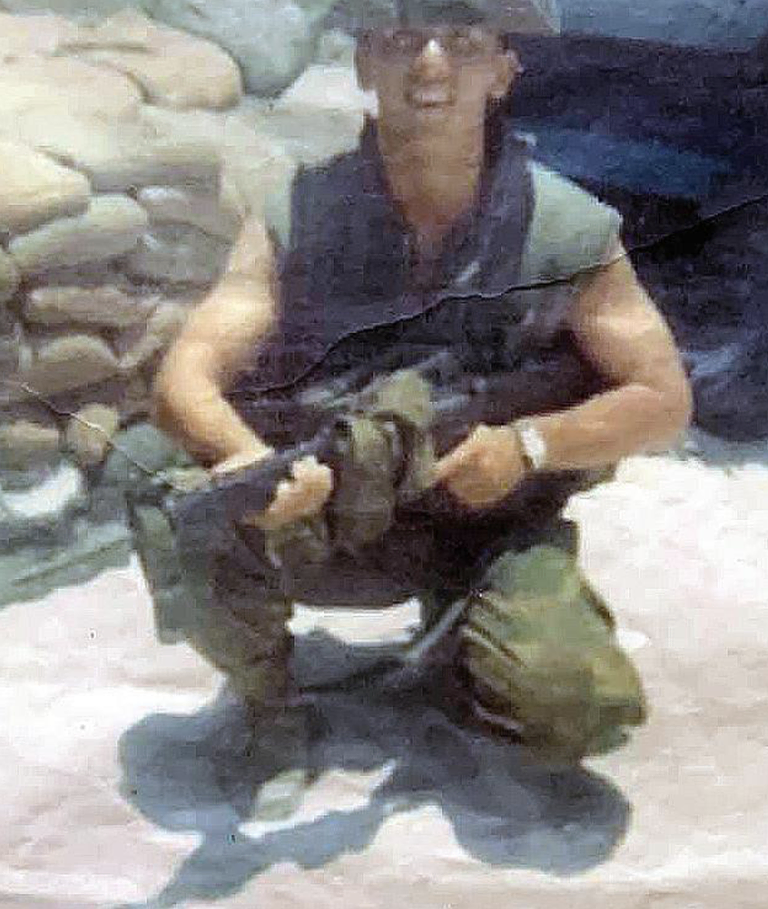 Brother Lasick in Da Nang
Frank served honorably, and like so many Vietnam veterans, he came back a changed man.
“[My time there] affected me a lot. Doing the operations and going out on patrol…you never know. I was always scared because when we would go out at the north end of the airstrip, the morgue was there. You’d look to the right and see all these coffins stacked. And then you’d say, ‘Am I going to be in one of those when I come back?’”
Frank had gotten engaged before leaving for Vietnam but called it off for her sake when he came back. “Look,” he told her, “I’m not the ki I was in high school anymore. I’m different.”
Frank spent years struggling with PTSD. From the early 1980s on, he, like so many, tried pushing the pain down, dealing with it silently. He even tried therapy at the VA, but nothing seemed to work. He briefly considered a service animal, but the programs in Illinois weren’t right for him. “I wasn’t going to raise a puppy from scratch,” he said. His wife, Patricia, pleaded with him to get some help for the sake of their marriage.
Finally, during COVID, a friend recommended a therapy group of about 30 veterans. Initially, it seemed to help. “I had never sat with a group,” he said. “And it was making me think differently.” The good results, however, were short-lived.
Frank had reached the end of his rope. He was tired of the pain. He found himself in the basement with a gun in his hand. “I decided that I don’t want to live. I can’t handle this. You want to cry, but you can’t cry. And once you do, you can’t stop.”
He was looking at pictures of his family – his wife and kids – one last moment to hold onto the happy memories. “I think the memories are what stopped me.” One of the pictures showed Frank and Patricia on a boat with their little Pekingese dogs. Seeing that picture, Frank’s thoughts again returned to getting a service dog. He put the gun down and went to the computer sitting right next to him.
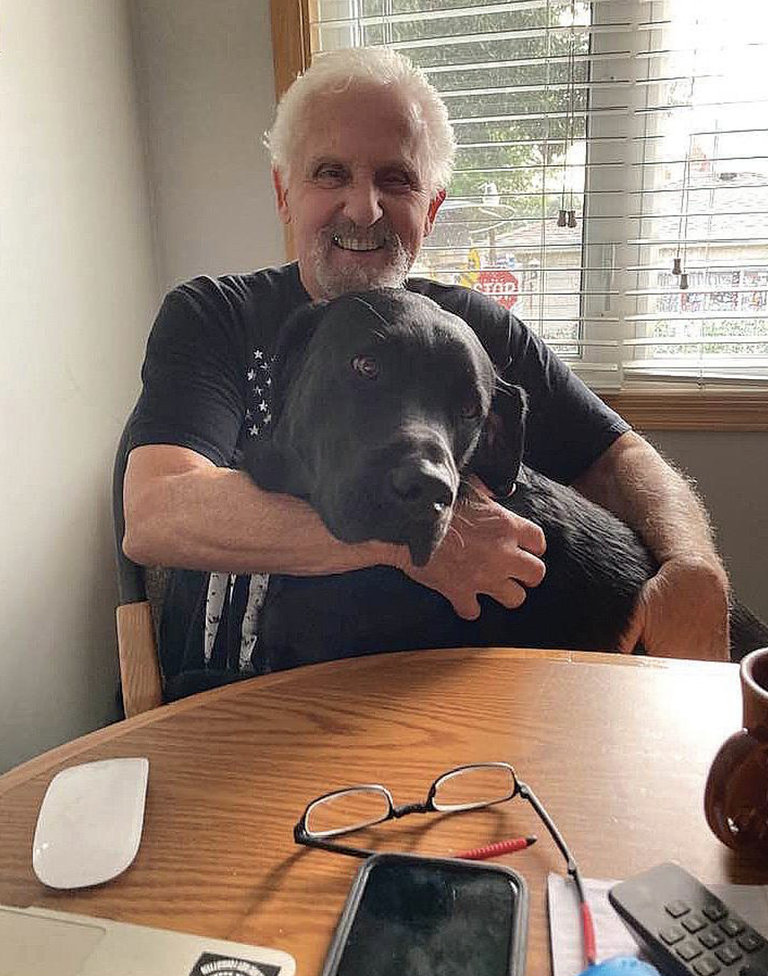 Brother Lasick with his dog, Thunder
“God was there with me. I guarantee you,” Frank recalled. “Why would he make me look at those pictures and then go right to the computer?” His search led him to America’s VetDogs. That decision quite literally saved his life.
Frank filled out the online questionnaire and waited. A few months later, he got a call from Carolyn Giambalvo, an admissions assistant at America’s VetDogs. He hadn’t filled out the application correctly, but she helped him navigate the process and get into the program. Frank credits Carolyn with changing his life. “I told her my story. She was with me, giving me confidence.”
America’s VetDogs was founded in 2013 by the Guide Dog Foundation for the Blind. Carolyn received her first dog from them in 2003. “I loved the organization so much, I started volunteering,” she said. “In 2008, I was lucky enough to become part of the consumer services office as an employee.”
Even though he had been accepted, the work was just beginning. Frank had to take videos of his home, his routine. They wanted to see his surroundings, assess his mobility, and ensure he could care for a dog. He finally got the call that he was matched. “I was so excited I was crying because I thought this was going to help me.”
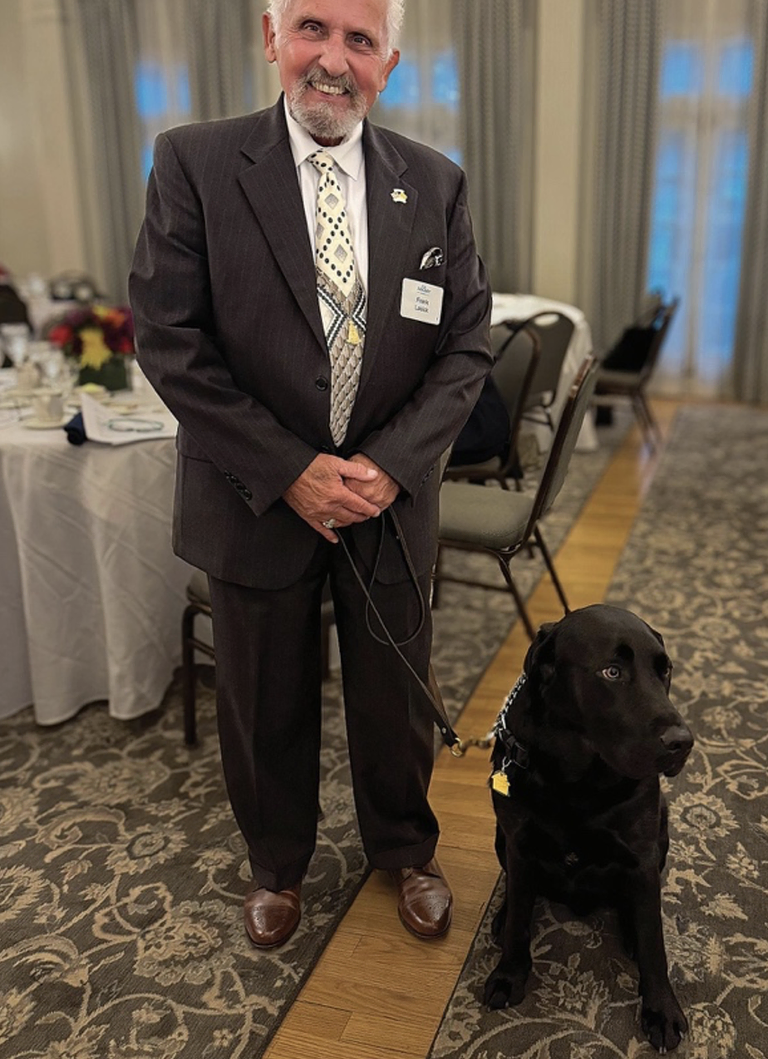 Brother Lasick and his dog, Thunder, at a formal event
America’s VetDogs flew him to Smithtown, Long Island, where he met Thunder for the first time for a two-week intensive training course. It was love at first sight for both of them. Thunder is Frank’s service partner in the parlance of the organization, and he never leaves Frank’s side. “He can sense when I’m getting sad or aggravated, and he’ll come up and nudge me.” Thunder sleeps right next to the bed, and if he senses anything wrong, he’ll spring into action. If Frank is having a nightmare, Thunder wakes him. If he’s restless, Thunder lies next to him to calm him. He has become an indispensable part of the family.
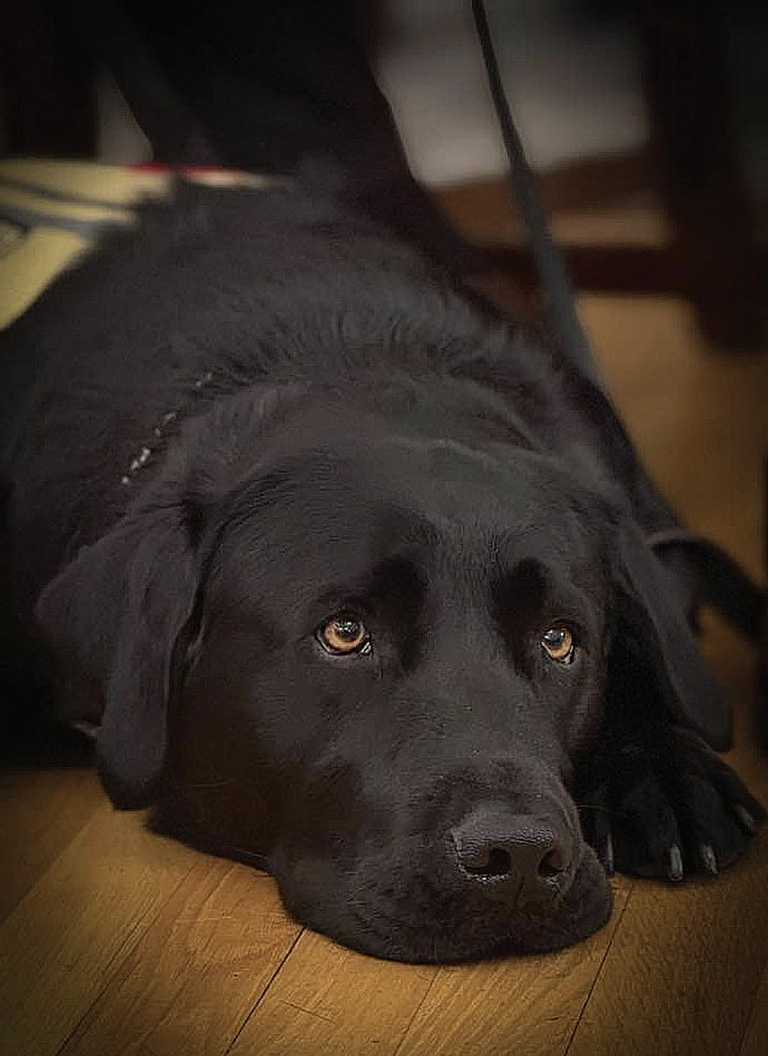 Brother Lasick’s dog, Thunder
Since receiving Thunder, Frank has become an unflinching advocate for the organization. “He’s done speaking engagements for us,” Carolyn said. “Word of mouth is a big, big part of how people find out about us.”
And they want people to find out about them. Their work saves lives, and Frank knows firsthand just how true that is. “A picture is worth a thousand words,” Carolyn said. “Just the fact that people are seeing one of our graduates and how the dogs are helping is an advertisement in and of itself. Because we’re a non-profit, we rely on the generosity of private donations.”
Frank and Thunder have no plans of stopping. Whenever he can, he and Thunder attend events to raise awareness and funds so that other veterans can receive the same life-changing help he did.
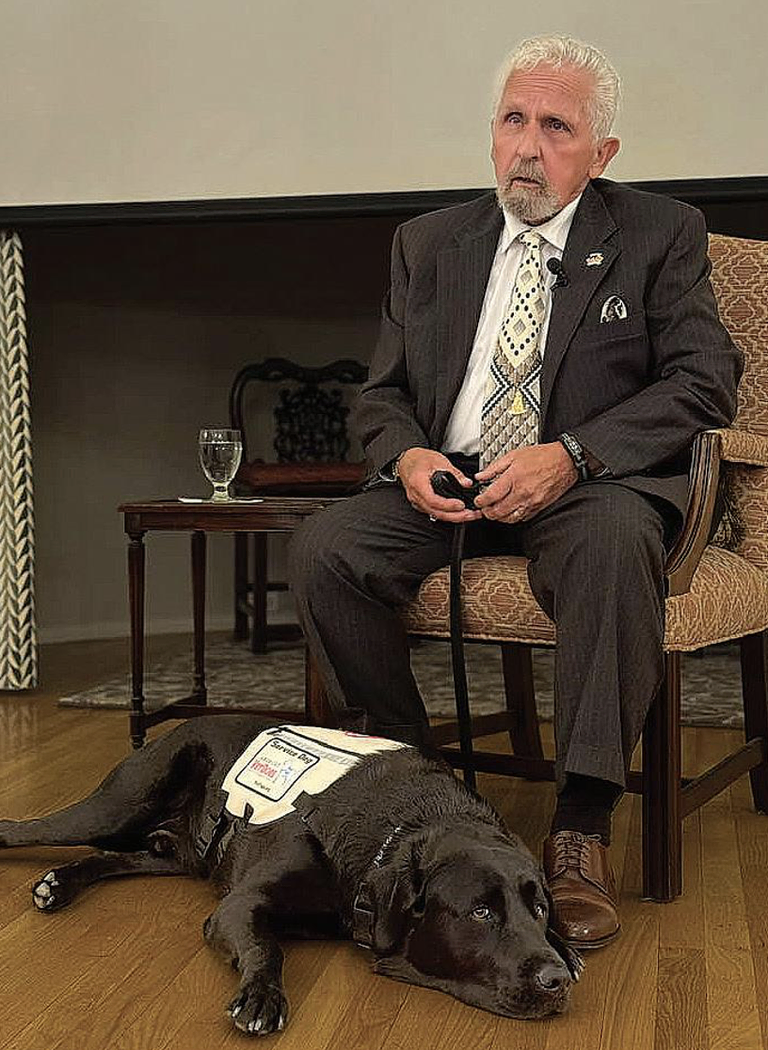 Brother Lasick and Thunder
Recalling how his life was before Thunder, he observed that Thunder is more than a pet, more than a friend. “He’s my partner,” says Frank with a smile. “I owe him my life.”
More than anything, Frank is grateful for the days after the Thunder.
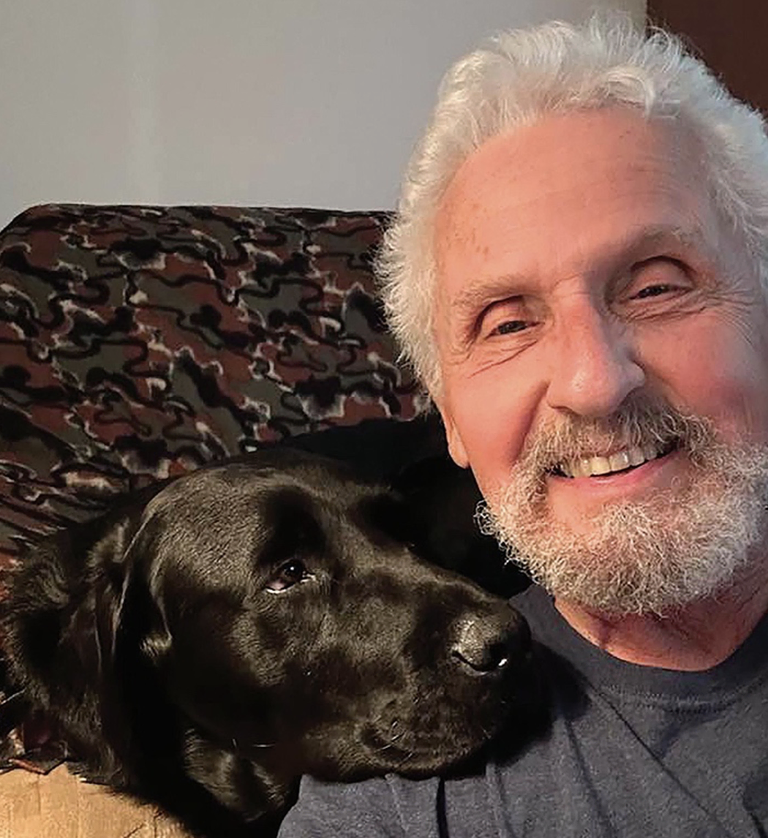 Brother Lasick and Thunder
If you or someone you love is struggling with thoughts of suicide, call the Suicide & Crisis Hotline at 988. You are not alone.