Masonic philosophy has produced some of the most thoughtful writing on symbolism, moral development, and the inner life of the Craft. This guide covers three titles that have stood the test of time, plus libraries, research organizations, and guidance on where to look and what to avoid.
You’ve sat in the lodge. You’ve witnessed the degrees. You’ve heard the language of philosophy and symbolism woven through the work. And somewhere along the way, you found yourself wanting more.
That question is one of the oldest in Freemasonry. The Craft has always pointed toward something deeper, and the Brothers who feel that pull are the ones who tend to go the furthest on this journey.
Masonic philosophy isn't a fixed doctrine. It's a centuries-long conversation about character, duty, and what it means to live well. The degree work is one doorway into that conversation. What follows are some of the most reliable ways to go deeper.
What Do We Mean by “Masonic Philosophy”?
Masonic philosophy isn’t a unified system with a single authoritative text. It’s better understood as a continuous conversation, one that spans centuries, about what it means to live with integrity, pursue truth, and serve something larger than yourself. The degree work, the symbolism and story: these are all vehicles for that conversation. The literature and resources below are places where that conversation has been recorded, debated, and deepened.
Where to Begin: Three Books Every Mason Should Know
The literature on Masonic philosophy runs deep — centuries of scholars, historians, and working Masons putting into words what the Craft is pointing toward. It can be hard to know where to start. These three titles have stood the test of time and earned their place in the conversation. Whether you've just witnessed your first degrees or you've been on this journey for years, they're a reliable place to begin.
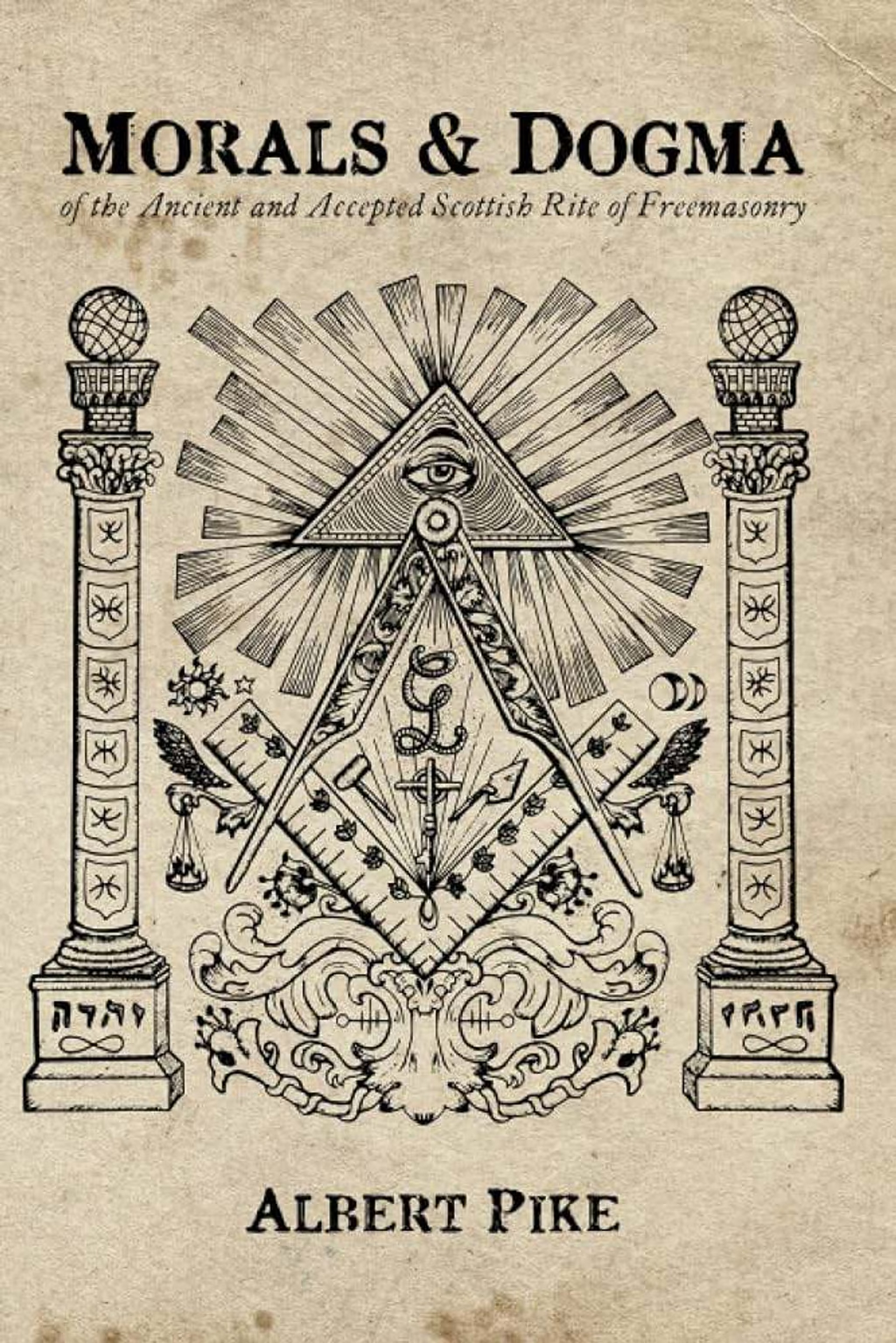 Morals and Dogma by Albert Pike is a foundational text on Scottish Rite Masonic philosophy.
1. Morals and Dogma - Albert Pike: Brother Pike's masterwork walks through the symbolism and moral teachings behind each of the 3 Blue Lodge degrees and the 29 degrees of the Scottish Rite, drawing on philosophy, history, and timeless wisdom to illuminate the deeper purpose of the Craft. If you’re looking to understand the intellectual heritage of Scottish Rite Freemasonry, this is a natural place to begin.
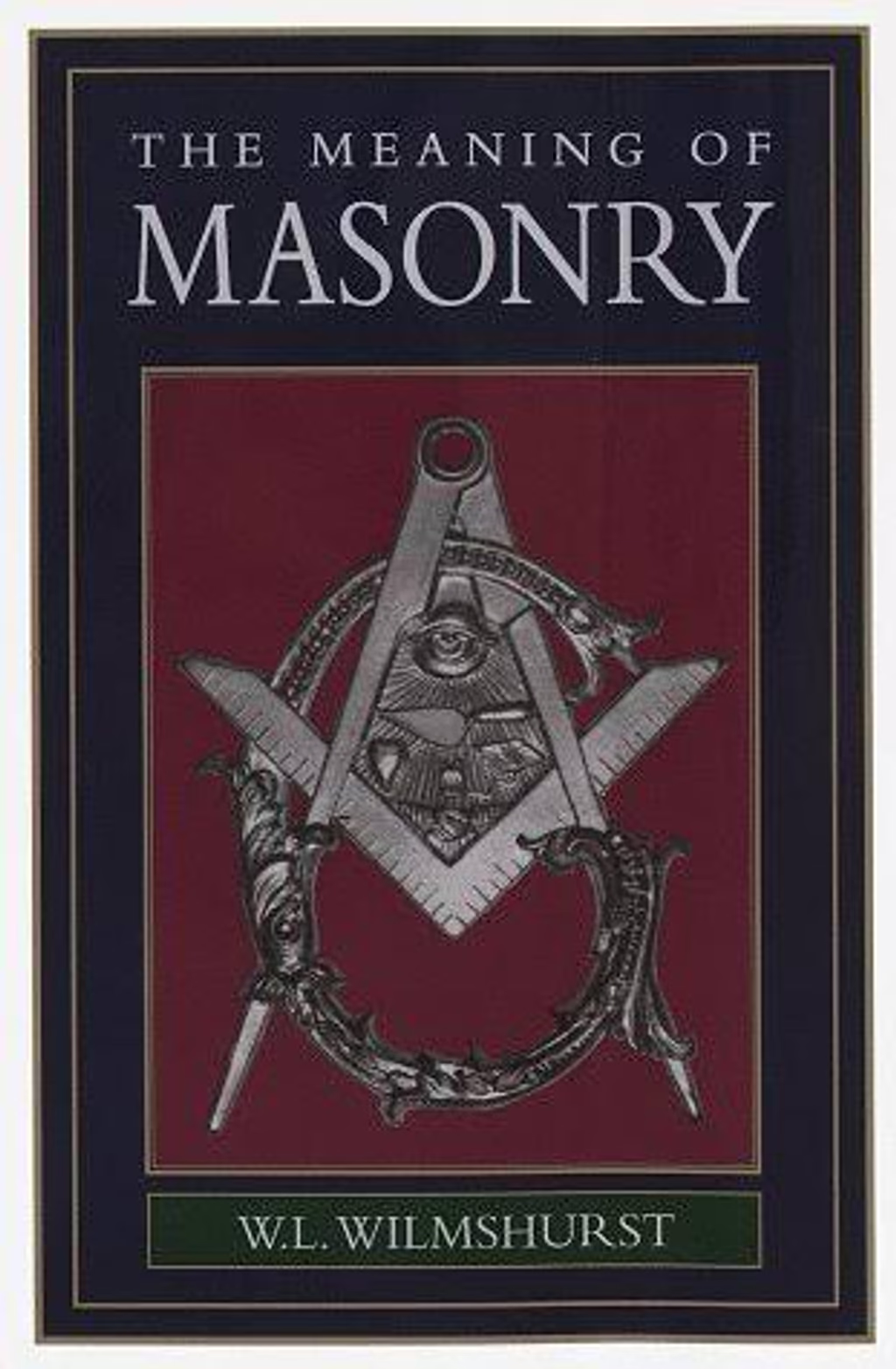 The Meaning of Masonry, by W.L. Wilmshurst is a widely recommended book on the inner dimensions of Masonic practice.
2. The Meaning of Masonry - W.L. Wilmshurst: If you've ever witnessed a degree and felt the pull to keep going, Brother Wilmshurst wrote this book for you.
Rather than cataloging ceremony or history, he focuses on the inner, transformative aspects of Masonic practice: what the Craft is calling you to become. It remains one of the most widely recommended books in Freemasonry for good reason, and it reads as clearly today as when it was first written.
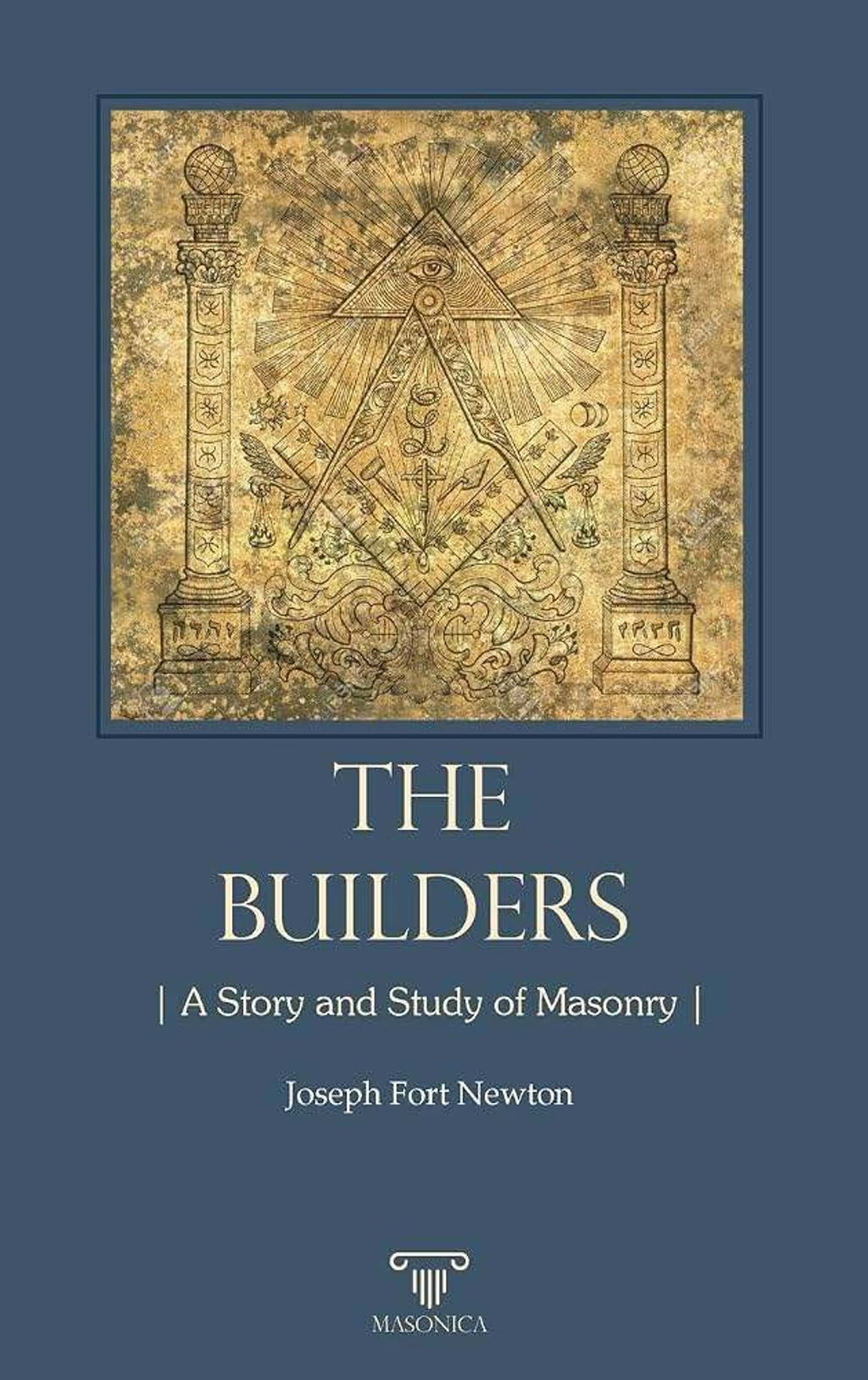 The Builders, by Joseph Fort Newton is an accessible introduction to Masonic history and philosophy, first published in 1914.
3. The Builders - Joseph Fort Newton (1914): First published in 1914 and still one of the most recommended books for new Freemasons, The Builders is one of the most approachable entry points into Masonic philosophy you'll find.
Brother Newton covers history, symbolism, and the deeper meaning of the Craft in a way that welcomes the reader rather than overwhelming them. If a Brother is just beginning to ask what Freemasonry is really about, this is often the first book they're handed, and for good reason.
All three titles can be found through major booksellers and are also available to borrow through the Scottish Rite Masonic Museum and Library.
Looking for a broader reading list? Check out our “20 Books Every Mason Should Read” guide.
Beyond the Books
Every Brother finds his own way into philosophy. For some, it's a book. For others, it's a collection, a catalog, or a conversation with a fellow Freemason who's been studying the Craft longer. Here are a few reliable places to continue:
Scottish Rite Masonic Museum & Library (SRMML)
Located in Lexington, Massachusetts, the Scottish Rite Masonic Museum & Library holds one of the most significant collections of Masonic artifacts, manuscripts, and research materials in the world. Their online catalog is freely searchable, and their librarians are a wealth of knowledge. If you’re looking to go deeper on a specific symbol, degree, or period in Masonic history, this is the right place to continue.
More Ways to Explore
Several organizations are dedicated specifically to Masonic research and scholarship. The Philalethes Society, North America's oldest independent Masonic research society, publishes a quarterly journal on Masonic history, philosophy, and symbolism and maintains a digital archive of nearly four thousand articles dating back to 1946. It's a reliable source of serious, vetted scholarship and a significant step up from what you'll find on most corners of the internet.
 The Philalethes Society, North America's oldest independent Masonic research society, founded in 1928.
A Note on Vetting Your Sources
Not everything written about Masonic philosophy is reliable. The internet has made it easy to find confident-sounding claims about Masonic history, symbolism, and meaning — many of which don’t hold up to scrutiny. A few guidelines worth keeping in mind:
- Be cautious with YouTube and social media content. Video content on Masonic philosophy varies wildly in quality. Without knowing an author’s credentials or their relationship to the Craft, it’s hard to assess what you’re actually getting.
- Pre-1900 sources can be valuable, but context matters. Older texts were written at a time when certain assumptions about history were still unchallenged. The philosophical insights in these works often hold up well; the historical claims sometimes don't.
- Look for sourced, cited work. The best Masonic scholarship cites its sources. If a book or article makes sweeping claims about Masonic origins or meaning without attribution, approach it with caution.
- The Scottish Rite Masonic Museum & Library is a reliable anchor. When in doubt, cross-reference against SRMML’s catalog and recommended resources.
Keep Going
The question that started this search isn't one you'll answer in a single sitting. But it's one worth carrying, and the resources above are a good place to begin. The Brothers who find the most meaning in the Craft are usually the ones who never stop asking.