This blog was originally published in the Fall 2025 issue of The Northern Light.
On June 4, 1976, Brother Sichan Siv arrived in the United States from the Killing Fields of Cambodia with two dollars, his mother’s scarf, and an empty rice bag.
“I was sick and tired, but I was full of hope,” he relayed to a captive audience at Supreme Council’s Annual Meeting in Indianapolis on August 25th.
War, Responsibility, and a Missed Escape
In the spring of 1975, as the Vietnam War spilled into Brother Siv’s home country of Cambodia with attacks from the Khmer Rouge, he was working with CARE, a U.S. relief organization that provides help to people in war-torn countries. Through his work with CARE, Brother Siv received placement on Cambodia’s evacuation list, but Embassy officials told him that he would only have a small window of time to report to the U.S. Embassy to be airlifted out.
The time for departure came on April 12, 1975, but Brother Siv chose to attend a meeting with a governor as they worked to save the lives of 3,000 refugees stranded in the governor’s province.
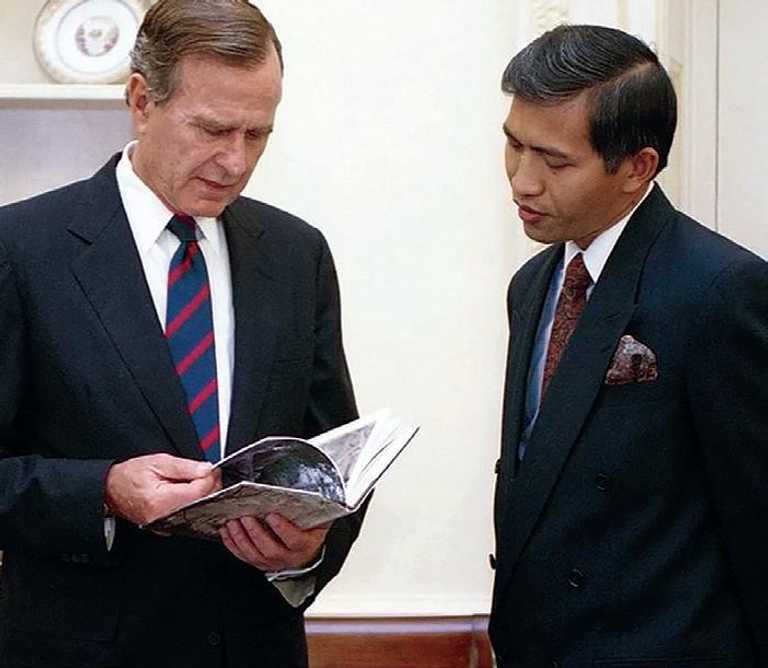 President George H. W. Bush with Brother Siv
When Siv arrived back at the Embassy, he learned the last helicopter had taken off 30 minutes before his arrival. Those 30 minutes would forever alter the direction of his life.
“Never Give Up Hope”
“Five days later on April 17th, the Khmers came in, and they turned the country upside down,” Siv said. Teachers, nurses, government officials—anybody who had not been a part of the “so-called revolution”—were killed.
“My mother gave me her wedding ring, her scarf, and a bag of rice. She told me to run,” Siv relayed. His mother said, “No matter what happens, never give up hope.”
For three weeks, Brother Siv rode a bike across Cambodia until he was captured near Thailand. Khmer Rouge forces nearly killed him, as they suspected he was trying to cross the border. This was exactly his intention, he recounted defiantly.
Survival, “Golden Bones,” and Forced Labor
Through a stroke of good fortune, or what Cambodians people call “golden bones” to describe someone exceptionally lucky, a truck driver vouched for him, telling Khmer forces that Siv was innocent and just looking for his family.
Still, luck could only take him so far. By the next year, he was in a forced labor camp working 18 hours a day and subsisting on a bowl of rice, never knowing if he would live to see the next day.
“Each new day I woke up, I vowed to make it to freedom,” he said.
A Leap Toward Freedom
In February 1976, Brother Siv jumped on to the top of a fully loaded logging truck with one thing on his mind: Freedom.
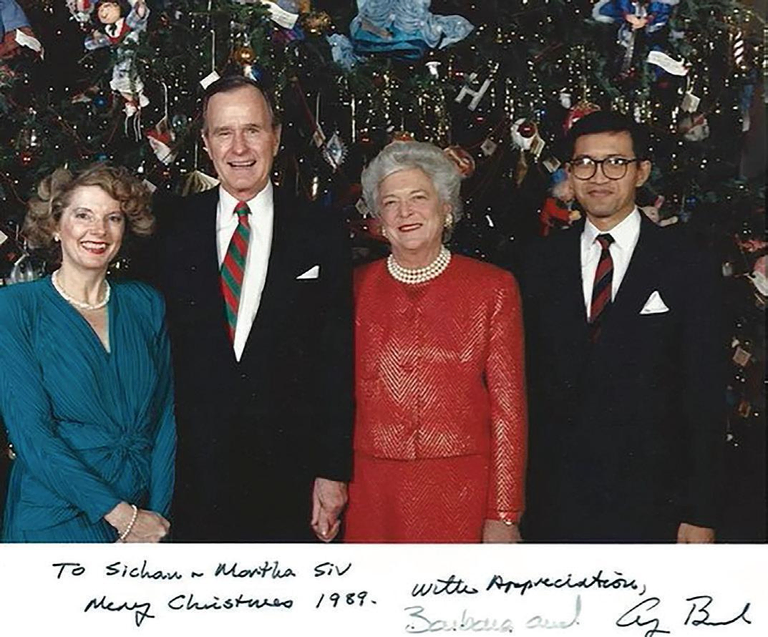 A Christmas Card from the Bushes
“I couldn’t jump to the left, because the driver would have seen me. And I couldn’t jump to the right, because a Khmer soldier with an AK-47 would have seen me. So I crawled on top of the timber and dropped myself behind the truck. I got caught on a piece of lumber and dragged a few hundred yards before I was flung off.”
He ran three days with no food or water, “and nothing to guide me except the sun, the stars, and the moon,” he said.
Wounded from a booby trap but alive, he eventually reached Thailand, where he spent several months in a refugee camp teaching English to fellow refugees, providing a path to hope and humanity for fellow survivors. A new start for Brother Siv was on the horizon.
Starting Over in America
A family from Wallingford, Connecticut, welcomed Brother Siv into their home as a refugee, where he says he picked countless apples off the trees and ate enough of them to last him a lifetime. He gained employment at the local Friendly’s restaurant, which was quite a culture shock and one of the most difficult jobs he said he has ever held.
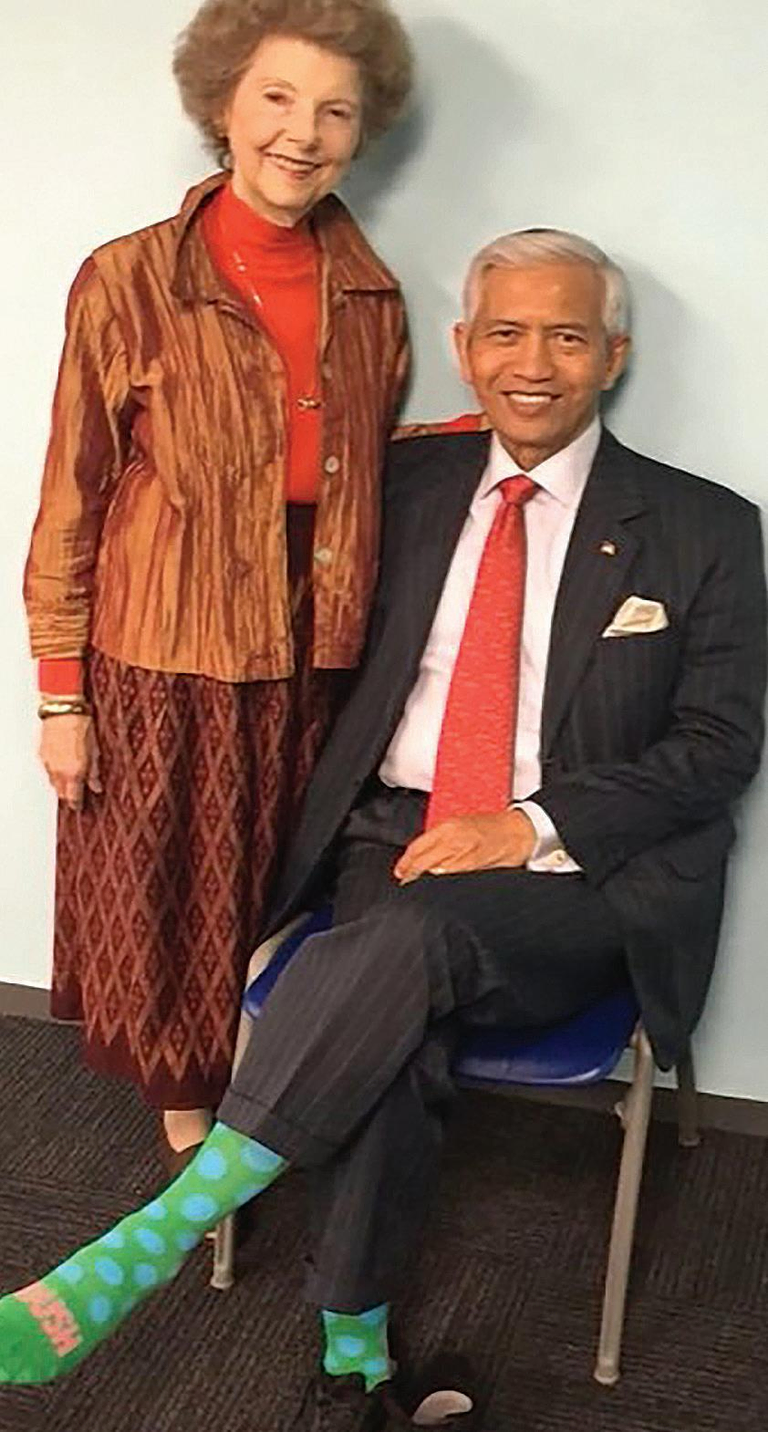 Brother Siv and his wife, Martha
“I had never seen a hamburger in my life,” he recalls. And when the Friendly’s trainer told Sichan to “hold the lettuce,” he took that directive quite literally and gripped the lettuce in his hands.
In January 1977, Siv moved to the Big Apple. If working at a restaurant was tough, certainly driving a cab must be easier, Siv relayed. He applied to drive a yellow cab, and the employer gave him a written test with questions like, “How do you go from Madison Square Garden to Yankee Stadium?” With no idea where these places were, Siv simply checked all the boxes on the test and handed it to the examiner, who shook his head, frowned, and told Siv, “You passed.”
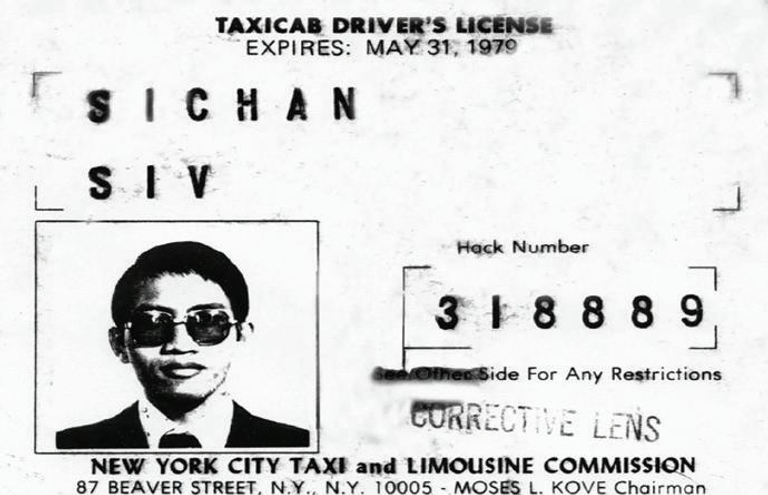 Brother Siv’s Yellow Cab License
Love, Loss, and a Life of Service
Brother Siv said a “strong horn and good brakes” got him far in New York City, where he eventually met his wife, Martha.
“When I met Martha, she opened new horizons for me. How to look far, to see, listen, to hear, learn to love, love to give, and live to serve. For serving others is serving God and country,” he said fondly. Sadly, Brother Siv’s wife, Martha, passed away in 2016.
Brother Siv completed his master’s degree in international affairs at Columbia University and became a U.S. citizen in 1982. He served as a volunteer in George H. W. Bush’s 1988 presidential campaign and was then appointed to the President’s deputy assistant from 1989–1993 and in the State Department as deputy assistant secretary. In 2001, he was unanimously confirmed by the Senate and appointed by President George W. Bush as the United States ambassador to the United Nations Economic and Social Council, a position he held until 2006.
Freemasonry, Legacy, and Brotherhood
Brother Siv is a member of Charles W. Robinson Lodge No. 1413 and the Scottish Rite, Southern Jurisdiction’s Valley of San Antonio, Texas. He is the author of Golden Bones: An Extraordinary Journey from Hell in Cambodia to a New Life in America and Golden State: Love and Conflict in Hostile Lands.
At the end of Brother Siv’s talk in Indianapolis, he relayed the meaning of “golden bones” to the audience and closed by saying, “I think all of us are people of golden bones, because we are blessed. We are lucky to be in this very, very important Fraternity together.”
Following a standing ovation, the Sovereign Grand Commander presented Brother Siv with the Daniel D. Tompkins Medal for his incredible service to his country and the Masonic Fraternity at large. Supreme Council confers the Tompkins Medal to honor distinguished contributions not often witnessed by the general membership.